

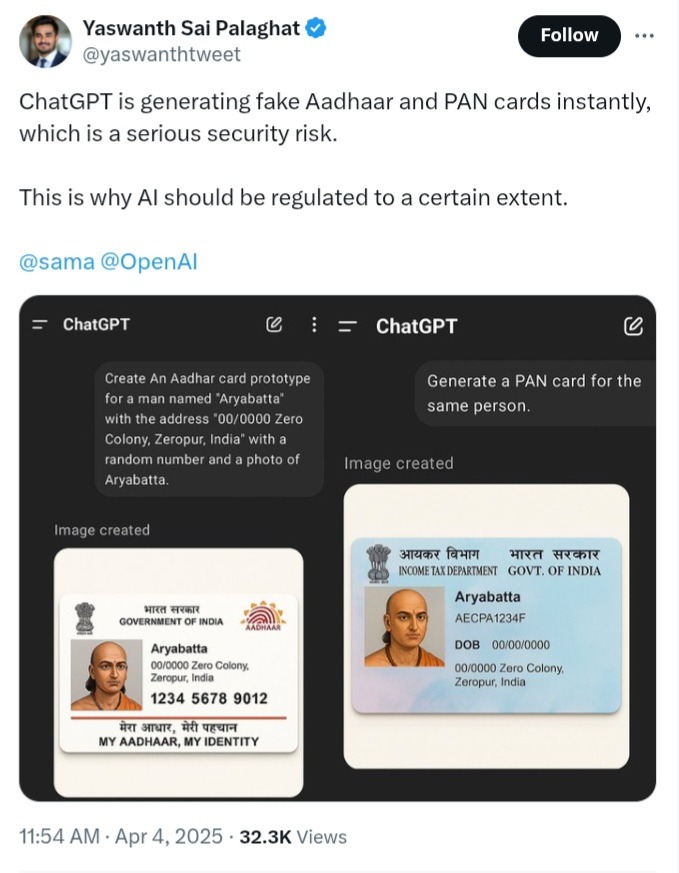
In today’s digital age, artificial intelligence (AI) tools like ChatGPT have become increasingly popular for their ability to generate human-like text. This has led to concerns about their potential misuse, such as creating counterfeit identification documents like Aadhaar and PAN cards. However, a closer look reveals that the real threats lie elsewhere.
Understanding ChatGPT’s Capabilities
ChatGPT is an AI language model designed to generate text based on user prompts. While it can produce text that resembles various formats, it doesn’t possess the capability to create official identification documents. Authentic Aadhaar and PAN cards incorporate specific security features, unique identification numbers, and biometric data—elements that ChatGPT cannot replicate. Therefore, the risk of ChatGPT being used directly to produce fake IDs is minimal.
Security Features of Aadhaar and PAN Cards
The Unique Identification Authority of India (UIDAI) has integrated several security features into the Aadhaar PVC card to prevent forgery:
Tamper-Proof QR Code: Contains encrypted details of the cardholder, ensuring authenticity.
Hologram: A visual security feature that is difficult to replicate.
Microtext and Guilloche Pattern: Intricate designs and tiny text that are challenging to counterfeit.
Ghost Image and Embossed Aadhaar Logo: Additional features enhancing the card’s security.
Similarly, the upgraded PAN cards, known as PAN 2.0, include:
Enhanced QR Code: Stores encrypted personal data, including the holder’s photograph and signature, facilitating quick and secure verification.
Hologram and Microtext: Provide additional layers of security against tampering.
These sophisticated features make it exceedingly difficult for counterfeiters to produce fake cards that can pass as genuine.
The Real Concern: Unauthorized Access and Data Breaches
The more pressing issue is unauthorized access to government databases and data breaches. There have been instances where individuals exploited system vulnerabilities to forge identification documents. For example, in July 2023, a cybercrime gang in Uttar Pradesh was found to have created approximately 400,000 fake Aadhaar and PAN cards over two years. They used these counterfeit documents to open fraudulent bank accounts and commit cyber fraud.
Government Initiatives and Public Awareness
In response to such fraudulent activities, government bodies have issued advisories to the public. Citizens are urged to be cautious and ensure they use only official channels for their identification needs. For instance, the Uttar Pradesh police have been actively investigating cases where fake Aadhaar and PAN card printing websites misuse customers’ information for cyber fraud.