The all-new Nissan Leaf debuts as a coupe-SUV with two battery options, up to 603 km range, advanced tech, and a premium cabin. A bold step forward in Nissan’s EV journey.

The Nissan Leaf, one of the world’s most recognisable electric vehicles, has undergone a dramatic transformation for 2026. No longer a hatchback, the all-new third-generation Leaf adopts a coupe-SUV body style and debuts with significant upgrades in design, technology, and range. Built on the Renault-Nissan Alliance’s dedicated CMF-EV platform, the new Leaf looks to offer both innovation and practicality for the modern EV buyer.
Visually, the 2026 Leaf has moved away from the conservative styling of its predecessor. The front end borrows elements from the Nissan Ariya, including a sleek reinterpretation of the brand’s V-Motion grille and boomerang-shaped LED headlamps. Some variants also feature a full-width light bar and an illuminated Nissan badge, depending on the market.
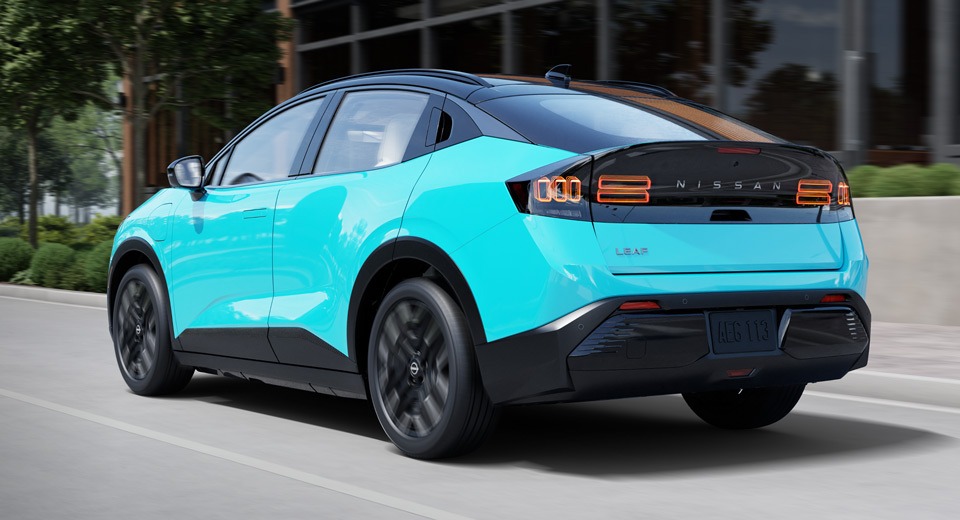
At the rear, the design is equally striking. A ducktail-inspired boot lip merges into a blacked-out section housing sharp 3D-effect tail lamps and a bold Nissan wordmark. The bumper is more rugged, with added cladding to enhance the SUV appeal. The overall styling is more aerodynamic too, with a drag coefficient of 0.26—down from 0.29 in the outgoing model. Highlights such as flush door handles, pillar-mounted rear handles, and dual-tone paint options like Seabreeze Blue Pearl and Coulis Red Pearl give it a distinct presence on the road.
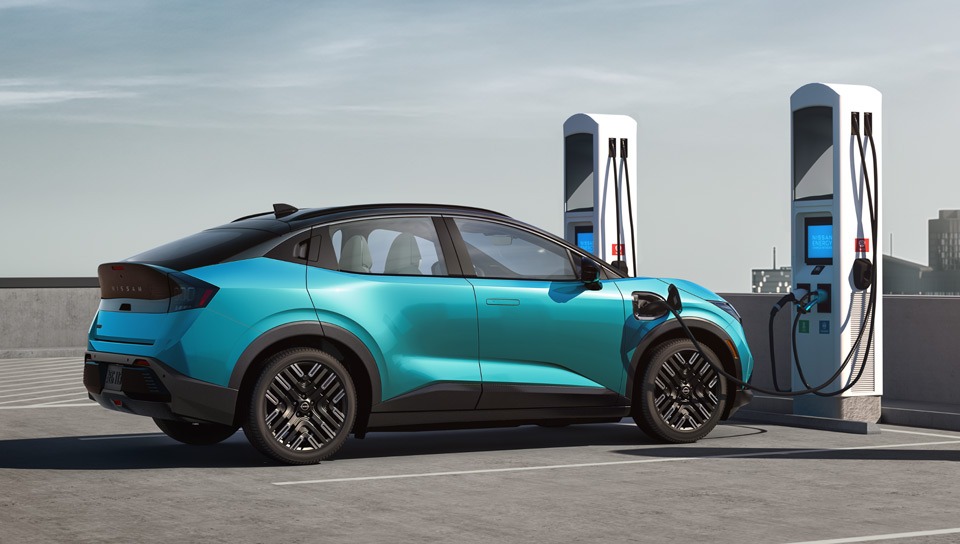
Powering the new Leaf are two battery options. Buyers can choose between a 52 kWh battery paired with a 174 bhp motor producing 345 Nm of torque or a larger 72 kWh battery mated to a 215 bhp motor that delivers 355 Nm. The larger battery variant claims a WLTP range of up to 603 km, while the smaller pack offers up to 434 km. Both versions support 150 kW DC fast charging, and North American variants come equipped with the new NACS connector, offering access to Tesla’s Supercharger network.
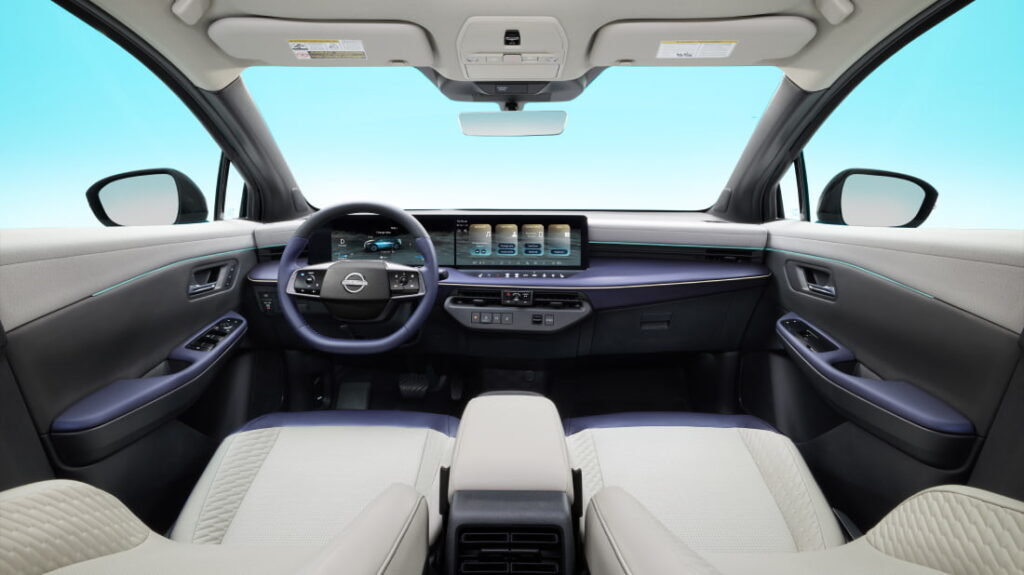
Inside, Nissan has completely reimagined the cabin layout. A flat floor enhances space, and there’s more comfort for rear passengers compared to the previous model—an area where EVs typically struggle due to battery packaging. The dashboard features a clean walkthrough design, with minimal physical buttons and a central console that’s detached from the main dash.
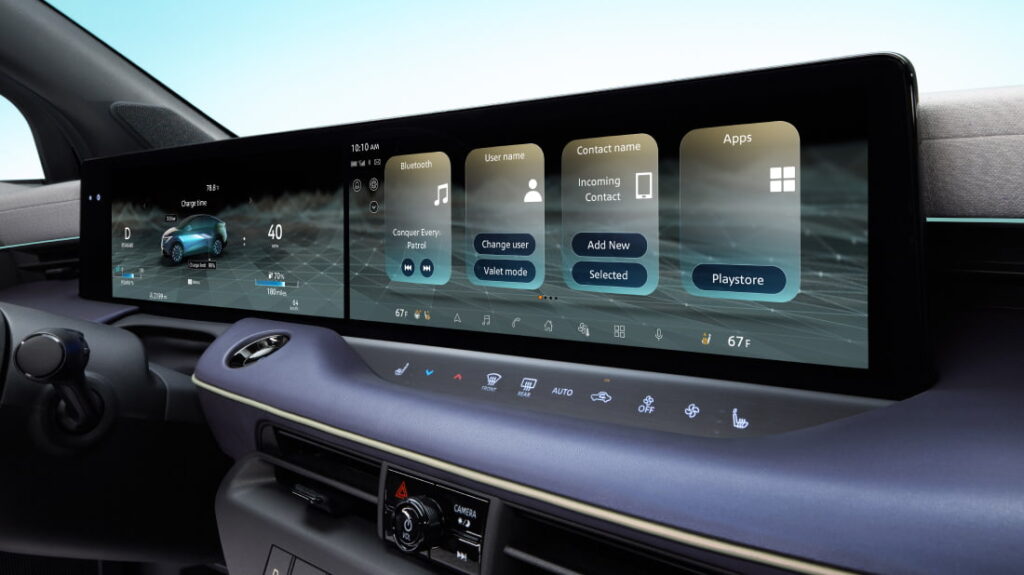
Depending on the variant, customers get either twin 12.3-inch displays or an upgraded 14.3-inch infotainment unit for higher trims. The infotainment system is complemented by a sleek touch-sensitive climate control panel, while essential functions like hazard lights and drive mode selection retain physical controls. Entry-level trims (S and S+) get the smaller screen setup, while the SV+ and Platinum+ trims receive the larger display and access to additional tech features.
Also Read: Hyundai Palisade Hybrid India Launch Confirmed for 2028: What to Expect
Connectivity and smart features are extensive. The new Leaf supports wireless Apple CarPlay, Android Auto, Amazon Alexa integration, and even built-in Google services on higher trims. ProPilot Assist, Nissan’s advanced semi-autonomous driving suite, comes standard, offering features like Intelligent Cruise Control, Lane Keep Assist, and Driver Monitoring.
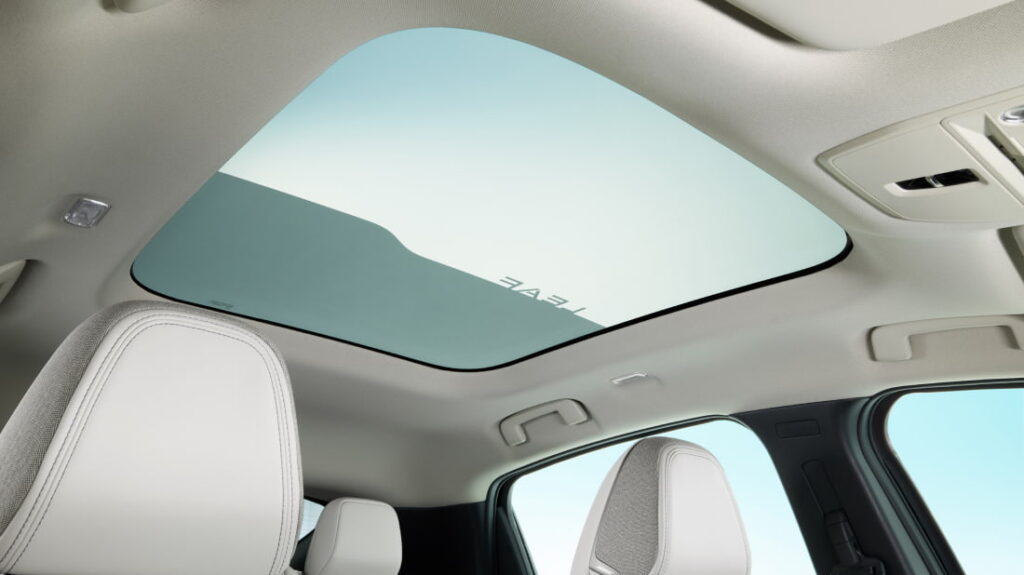
Additional driver assistance tools include an 8-point 3D surround view system, an Invisible Hood View, and a Front Wide View camera for navigating around obstacles. Nissan is also introducing a Dimming Panoramic Roof, using PDLC tech to let users control the level of transparency at the touch of a button.