Compare Tata Harrier EV and Mahindra XEV 9e on price, range, battery, dimensions, and performance. Find out which electric SUV fits your needs in India.
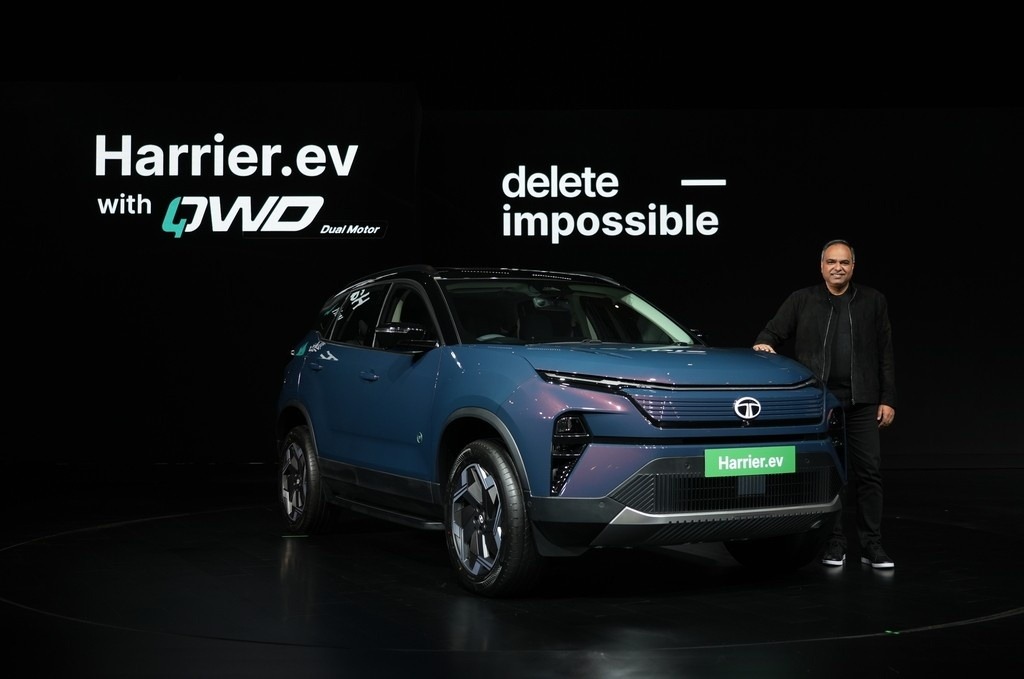
Tata Motors has officially launched the Harrier EV in India, with bookings starting from July 2, 2025. Marking Tata’s fifth electric vehicle in the country, this mid-sized electric SUV comes with the brand’s first all-wheel-drive system. It will compete directly against the Mahindra XEV 9e in the growing electric SUV segment. Let’s take a detailed look at how these two rivals stack up in terms of price, size, battery options, and performance.
Starting with pricing, the Tata Harrier EV is priced at Rs 21.49 lakh (ex-showroom). Though Tata has yet to reveal a detailed variant-wise price list, this introductory figure places the Harrier EV about Rs 1 lakh cheaper than the base variant of the Mahindra XEV 9e, which is priced between Rs 22.65 lakh and Rs 31.25 lakh (ex-showroom), including the cost of a charger.
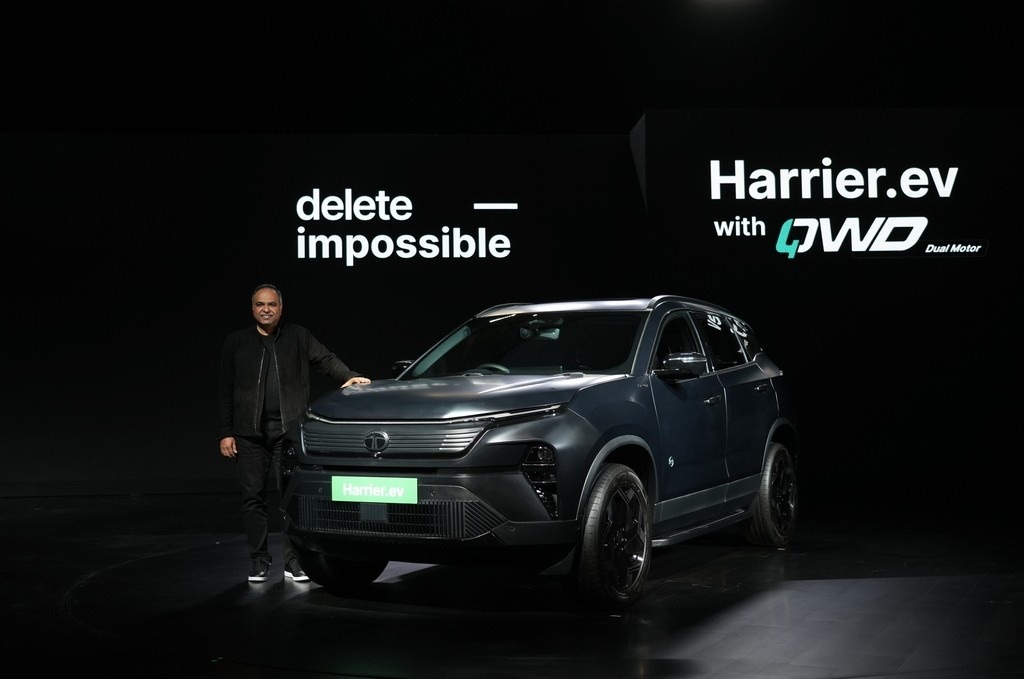
When it comes to dimensions, the Harrier EV measures 4607 mm in length, 2132 mm in width, and 1740 mm in height. The Mahindra XEV 9e is longer at 4789 mm but narrower and slightly lower, measuring 1907 mm wide and 1694 mm tall. Both SUVs have similar wheelbases, with the Harrier EV at 2741 mm and the XEV 9e slightly longer at 2775 mm, indicating more cabin space in the Mahindra. Boot space also favors the XEV 9e, offering 663 litres compared to 502 litres in the Harrier EV. Additionally, the XEV 9e provides a generous 150 litres of front trunk (frunk) space against Harrier’s 35 litres.
Also Read: Renault Offers Discounts of Up to ₹90,000 on Triber, Kiger and Kwid in June 2025
The Tata Harrier EV comes with two battery options: a 65 kWh and a larger 75 kWh pack. The 75 kWh variant features a dual-motor all-wheel-drive system delivering 156 bhp on the front axle and 235 bhp at the rear, producing a combined torque of 504 Nm. This setup allows the Harrier EV to sprint from 0-100 kmph in just 6.3 seconds. In contrast, the Mahindra XEV 9e offers 59 kWh and 79 kWh battery packs, with power outputs ranging from 228 bhp to 282 bhp and torque up to 380 Nm. It’s a rear-wheel-drive vehicle and takes 6.8 seconds to reach 100 kmph in its fastest form. While the XEV 9e produces more peak power, the Harrier EV’s all-wheel-drive setup and higher torque give it an edge in acceleration and overall driving dynamics.
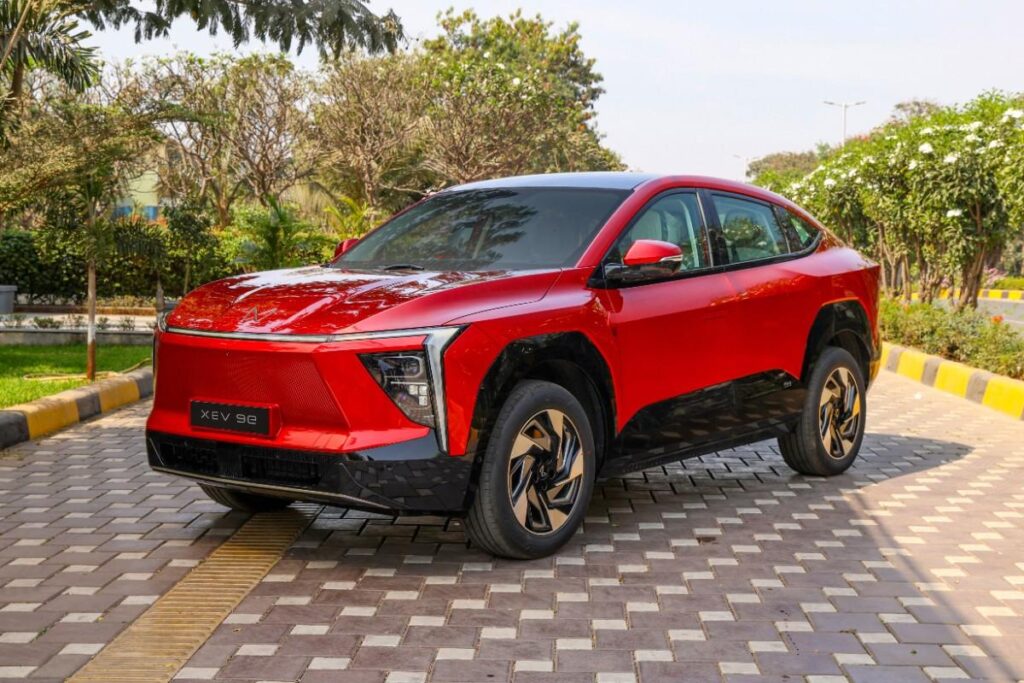
On the range front, the Harrier EV claims a maximum driving range of 627 km with its 75 kWh battery according to MIDC Part 1 + Part 2 Cycle figures. Real-world testing by Tata suggests a practical range between 480 and 505 km. The Mahindra XEV 9e delivers a range of 542 km with the smaller battery and up to 656 km with the larger 79 kWh pack, making it the longer-range option in this comparison.
Also Read: Volkswagen Offers Discounts of Up to ₹2.70 Lakh in June 2025 on Taigun and Virtus
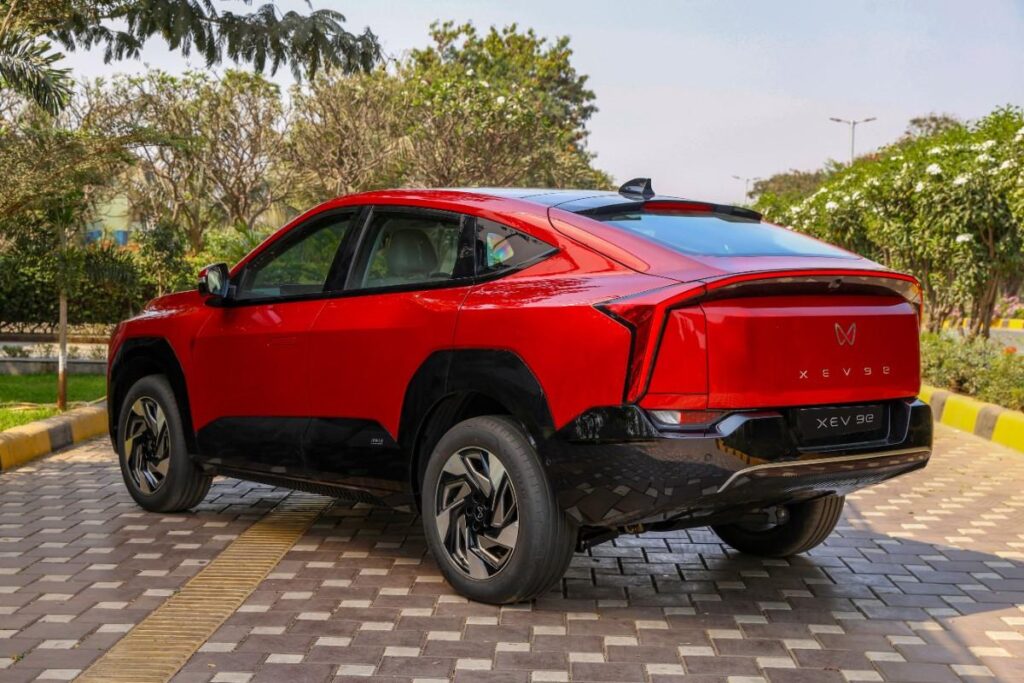
In summary, the Tata Harrier EV stands out with its all-wheel-drive system, quicker acceleration, and competitive pricing, while the Mahindra XEV 9e offers more space, longer range, and slightly higher peak power. Both SUVs bring compelling features to India’s mid-sized electric SUV market, catering to different priorities for potential buyers.
Also Read: Hyundai Alcazar Updated with New Diesel Corporate Variant and Petrol DCT Option
With bookings for the Harrier EV starting from July 2, 2025, the competition between these two electric SUVs is set to heat up as electric mobility continues to gain momentum in the country.